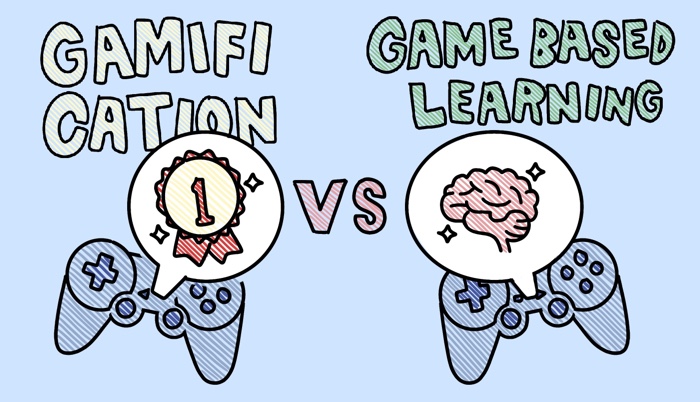
The Myth of Playing and Learning
By Play by FLIP Updated GeneralPart of the guide: 5 Things You Need to Know about Game-Based Learning

If you are the type of person who wakes up in the morning and often rush to check your phone, sip coffee, eat quickly, get to work, put all your efforts into coming up with brilliant ideas, set tight deadlines, have a high workload and always feel like you don't have enough time, then you are already living in a society that adheres to hustle culture.
Hustle culture is a culture that expects you to be always on 24 hours a day, no breaks, no weekends, no vacations, and doesn't deserve to have fun. In this culture, pleasurable activities were considered as unproductive, inappropriate, taboo, or even sinful.
If we want to rest, then it feels like we have to finish the work first. If we want to take time off, we must "be responsible first" by completing all existing KPIs. This makes us divide fun activities and "serious" activities into two separate things. This perspective then affects how we see things around us. For example, how do we view the activity of playing games with learning? Playing games is considered a fun activity, while learning is seen as a serious activity.
Although recent studies have shown that playing games can have positive effects such as improving focus, multitasking skills, and working memory in adults (Heiden, Braun, Muller, and Egloff, 2019), as well as improving cognitive and emotional functioning at work (Pallavicini, Ferrari, and Mantovani, 2018), but there is still a common view that playing games is bad, inappropriate and should not be done because it can distract us from the responsibilities and obligations of life.
Related to this perspective, there are at least two main myths about playing games in relation to learning and development.
First, many people think that playing games is only for small children and nerds!
That opinion is not correct at all. All age groups, with various interests and hobbies, basically like playing games, because playing alone is actually human nature. Humans have exhibited play behavior since ancient times, and more surprisingly, games are not a product of culture. In his book Homo Ludens, Huizinga argues that the existence of games is even older than culture. Culture refers to human civilization, so those cultural products cannot exist if they are not made by humans. Play behavior has been shown by animals (and then humans) long before human civilization developed.
Therefore, the feeling and desire to play actually exists in everyone, regardless of age, gender, social and economic status, even nationality. The forms also vary, ranging from traditional games to computer games. Over time, play becomes one of the few things that will remain the same in our lives; we are “addicted” because basically everyone likes to have fun!
So games and play activities are available for anyone, from children to adults, in various interests, hobbies, and occupations, local, national, regional, and even global.
Second, many of us think that it is impossible for us to learn or gain valuable insights just by playing games. This opinion, of course, is not entirely correct. Evidence shows that traditional societies pass on new information to their younger generations through games. More specifically, recent research has shown that in reality, children in traditional societies learn in the open, unsupervised environment that allows them to play and explore independently.
As Indonesians, we can also find this from the history of our cultural development. One of the characteristics of Indonesian culture involves storytelling and play, as can be seen in wayang kulit and folklore, which take advantage of playfulness in passing values from older generations to the next.
In addition, various information and skills have also been taught through traditional games. For example, the game congklak which teaches about the impact and consequences of a decision, or pretend-play which teaches us how to interact with other people and the social environment.
When designing a game, one of the important things is to place various contexts and predict responses that may arise in real life, to become part of the game. This is the reason why games can be designed close to reality with a variety of reasonable options. For example, when we run a mission in a game, there are usually several options to choose from (eg. search for clues, kill the dragon and advance to the next level, or reread the guidebook). This is similar to the situation when we try new things in life; we have several options for overcoming the challenges that arise. Simply put, games can be designed in such a way as to be realistic. Thus, the learning process is possible to occur.
When a game is designed specifically for training purposes, we are encouraged participants to overcome the challenges inherent in the game, which require them to practice and hone the necessary set of competencies such as decision making, critical thinking, or working in teams. This makes games an excellent tool for accelerating the process of learning a new skill.
In addition, interactive game features can also make players immerse themselves in the context of the learning presented. Games also provide opportunities for mistakes and failures. Thus the motivation to learn can be maintained to remain high because there are psychological elements such as curiosity, wanting not to lose, etc.
Hence, the game can actually be used as a learning tool, provided that the design process, contextualization is in accordance with the learning objectives and the learner himself.
To conclude, having fun while playing games has a bad reputation in our society because it is considered a distracting, time-consuming, and useless activity. This point of view makes the public perceive games as something that cannot be taken seriously, let alone as learning tools for adults. Even so, play is actually a basic human trait that since the dawn of civilization has helped build our society in many aspects. Recent studies and studies have also confirmed that playing games is associated with cognitive development in adults when designed for educational purposes because it allows us to digest learning more effectively.
Find yourself interested after reading this article? Try PLAY's game-based learning course and experience how you can get games and learning at the same time, and even support each other!
References
- Von der Heiden, J. M., Braun, B., Müller, K. W., & Egloff, B. (2019). The Association Between Video Gaming and Psychological Functioning. Frontiers in Psychology,10. Doi:10.3389/fpsyg.2019.01731
- Good gaming? Yes, video games can have positive effects on kids and adults. (2021, March 26). Herald Community Newspapers. https://www.liherald.com/westhempstead/premium/brandpoint/kids-family/good-gaming-yes-video-games-can-have-positive-effects-for-kids-and-adults,131343
- Halbrook, Y. J., O’Donnell, A. T., & Msetfi, R. M. (2019). When and How Video Games Can Be Good: A Review of the Positive Effects of Video Games on Well-Being. Perspectives on Psychological Science, 14(6), 1096–1104. Doi:10.1177/1745691619863807
- Pallavicini, F., Ferrari, A., & Mantovani, F. (2018). Video Games for Well-Being: A Systematic Review on the Application of Computer Games for Cognitive and Emotional Training in the Adult Population. Frontiers in Psychology, 9. Doi:10.3389/fpsyg.2018.02127
- Huizinga, J. (2016). Homo ludens. Angelico Press.
- Riede, F., Johannsen, N. N., Högberg, A., Nowell, A., & Lombard, M. (2018). The role of play objects and objects play in human cognitive evolution and innovation. Evolutionary Anthropology: Issues, News, and Reviews, 27(1), 46–59. doi:10.1002/evan.2155
Keep exploring: game-based courses · Play for Business · FAQ · General