Learning & Development Trends in 2022
By Play by FLIP Updated General
One department that plays a vital role in the organization is the Learning and Development department. This function is expected to be able to increase competencies and engagement of the employee within the organization. Research shows that employees in companies with organized teams supported by high levels of engagement, generate 21% more income , compared to those without. And this is produced through programs created by the Learning and Development department.
The 2020 pandemic has changed the world of the industry so much, including in the process of employee's learning and development. The Minister of Health of the Republic of Indonesia, Budi Gunawan Sadikin, estimates that our lives will take at least five years to return to "normal" after the pandemic. This is certainly not a short time, and cross-sectoral collaborative work is needed to improve the current situation.
In response to this, the Employee Learning and Development function needs to develop new strategies to ensure the learning and development process of employees within the organization can continue to run and have a positive impact on the company. One way to be able to find the right strategy is to pay attention to the current trends, especially in the pandemic era.
These are some trends that can be used as a reference in the preparation of learning strategies and employee development in our organizations:
Internet User Growth
A survey conducted by the Indonesian Internet Service Providers Association (APJII) found that there has been a significant increase in internet users in Indonesia in the last two years (starting from the beginning of the pandemic until mid 2021). As many as 72% of Indonesia's population use the internet intensively in 2021. This shows that more and more people are getting used to doing various things via the internet, including for learning purposes. Thus, providing learning programs to employees via the internet (online) could be one of the strategies taken by the L&D function.This strategy is not only more efficient (no need to pay for transportation, meals and accommodation), it can also reach employees in various regions.
Microlearning
Microlearning is a digital learning approach that creates training materials into bite-size duration, presented segment by segment to make learners more focused and with flexible learning time and excellent quality for each. This approach allows learners to chunk their learning bit by bit to be more focused and flexible in determining the time to study. The form of learning materials can be videos, infographics, or articles that only take 5 minutes to understand.
To better understand why microlearning will become a trend in the future, let's imagine frontline jobs such as customer service, bank teller, waitress, or security guard. This type of work can be challenging to get into training sessions that take hours, and they will also be distracted during the session because of their ongoing daily work. Microlearning can indeed reduce the distractions that may arise when we have to study offline for a long time, and so far, it is suitable for learning related to skill development. Therefore, microlearning can be an alternative in determining learning strategies in organizations.
Hyper-personalized learning programs
Many things around us today have been designed according to our needs, interests, and preferences. For example, when we open an e-commerce application, we will get recommendations for items that suit us. And these recommendations are the result of processing complex algorithms based on our behavior when we are in the application. What things do we look for, what items do we see for a long time, what articles we read, etc. All of this becomes data entered into the algorithm to provide recommendations to us.
Imagine if the same thing applies to the world of learning. Learning programs can also assemble training recommendations that are suitable for us, adjust to the duration of study we have, and adapt to our work schedule. Thus, learning is personalized in terms of the content of the material and the process of implementing the learning itself.
Imagine that you are a new employee for a Sales & Marketing position. To do a new job well, you need to master product knowledge, sales reports, procurement SOPs, and many more. Usually, you may only have 1-2 weeks to learn everything, plus the daily work that needs to be done. Traditionally, companies will create a series of face-to-face L&D programs, ranging from orientation sessions for new employees, classes, and even coaching sessions with direct supervisors. These efforts are becoming more and more complicated (ie : finding a schedule that works for all parties), especially in this modern world. In these conditions, personalized learning will be beneficial.
Virtual Training
Virtual training has recently become one of the employee learning and development landscape trends. But of course, this activity was carried out with some adjustments. Based on discussions with several leaders in the Human Resources Development department in Jakarta, there are some concerns about the loss of human interaction in virtual training. This happened because at the very beginning, the virtual training just presented a recording of speakers that were broadcast online. But over time, learning facilitators with more understanding of technology began to look for breakthroughs to overcome the challenges of human interaction in the virtual training session. Platforms like www.gather.town and www.virtualchair.net are two of the many providers that make the classroom or office situations more real through their UI/UX.
On the other hand, virtual training can still be used as an alternative to learning because it is considered very efficient and can even reach remote areas. It’s also cost-effective for the training organizer since there’s no additional cost for training logistics.
Game-based learning
One of the biggest challenges in the online learning process (especially asynchronous ones) is to ensure that participants will stay and complete their course.. Several sources stated that it was difficult for participants to be able to maintain their motivation to learn because the learning process is usually considered boring (just reading slides and watching videos), less interaction with the learning facilitator, and almost no challenges.
Meanwhile, there is something interesting in today's industrial world. At least a third of the current workforce is Millennials and Generation Z. This generation has many unique characteristics, but there is a common characteristic between them : their attention spans are generally very short. This makes learning with highly structured classes and long duration are no longer considered attractive.
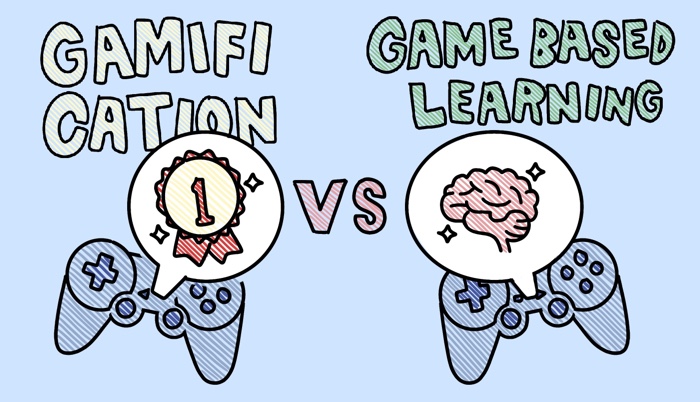
One of the innovations made to answer these challenges is to develop a game-based learning (GBL) process. This approach invites learners to learn a material through a process that adopts general principles in games. In GBL, there are a number of challenges, competitions, learning processes, practice opportunities, the use of music, and various contexts and characters.
Just imagine, which one is more attractive? Training on negotiation in face-to-face classes for two days, in google classroom through videos, reading materials, and assignments, OR playing games while learning about negotiation, with criminals who have bombs and hostages (with the risk of the bomb exploding or the hostage being killed)?
In this learning approach, the characteristics and principles of the game are embedded in learning activities to improve the overall learning experience and achieve the ultimate goal of learning. The core concept behind GBL is teaching through repetition, failure, and goal achievement.
Several studies have concluded that game-based learning can increase learning effectiveness through the dynamics that occur in it and high engagement from the participants.
It seems that game-based learning can be an alternative strategy for employees’ learning and development function. If you are interested in knowing and experiencing for yourself learning about the competencies needed to be skilled in sales through playing games, please play here.
Bottomline
The changes that occur in the world around us are getting more complex, confusing, and faster. The same is true for the employee learning and development function. For that, we need the right strategy to still improve the quality of its human resources so that it can realize its vision and mission in the future. Understanding the various learning trends (including game-based learning) that are currently happening will help the L&D Department to formulate an effective and efficient strategy for employee development.
Although the Covid-19 pandemic has caused a lot of uncertainty, the positive side is that this situation raises awareness about how technological advances have opened up opportunities for a learning process that is not only effective and efficient but still able to maintain participant engagement.
Reference
- Syed, N. (2021, July 2). Netflix-style learning? What will L&D look like in 2022? HRD Asia. https://www.hcamag.com/asia/specialisation/learning-development/netflix-style-learning-what-will-ld-look-like-in-2022/259720
- Stringer, G. (2021, September 6). 6 L&D trends you’ve got to know for 2022. HowNow. https://gethownow.com/blog/6-learning-and-development-trends-youve-got-to-know-for-2022/
- eLearning Industry Inc. (2021, May 12). Game Changer: Game-Based Learning And The Future Of L&D From The Engagement Experts. eLearning Industry. https://elearningindustry.com/free-ebooks/game-based-learning-and-development-future-engagement-experts?gtm_source=linkedin&action=download
- Lianovanda, D. (2020, December 10). Ampuhnya Metode Micro-Learning untuk Pembelajaran Online. ruangkerja Blog. https://www.ruangkerja.id/blog/ampuhnya-metode-micro-learning-untuk-pembelajaran-online
- Pappas, C. (2021, July 22). A Bite-Sized Guide To Microlearning [eBook]. eLearning Industry. https://elearningindustry.com/bite-sized-guide-to-microlearning-ebook
Keep exploring: game-based courses · Play for Business · FAQ · General